Sovryn Crypto Exchange Review: Bitcoin DeFi Deep Dive
 sept., 13 2026
Imagine holding your Bitcoin and wanting to trade it with leverage or lend it out, but without ever handing over your private keys to a centralized bank-like entity. That is the core promise of Sovryn, a decentralized finance platform built directly on the Bitcoin blockchain via the RSK sidechain. If you are tired of KYC forms and custodial risks, this review breaks down whether Sovryn actually delivers on its "your keys, your coins" mantra or if the technical hurdles make it too much hassle for the average user.
Key Takeaways
- True Non-Custodial Control: You keep your private keys; Sovryn never holds your funds, eliminating counterparty risk from exchange hacks.
- Bitcoin-Native Infrastructure: Built on RSK (Rootstock), leveraging Bitcoin's security while enabling smart contracts.
- No KYC Required: Trade and borrow without submitting ID documents, appealing to privacy-focused users.
- Liquidity Challenges: Lower trading volumes compared to Ethereum-based DEXs can lead to higher slippage on large trades.
- Technical Learning Curve: Requires understanding RSK gas fees and wallet integration, which may confuse beginners.
What Exactly Is Sovryn?
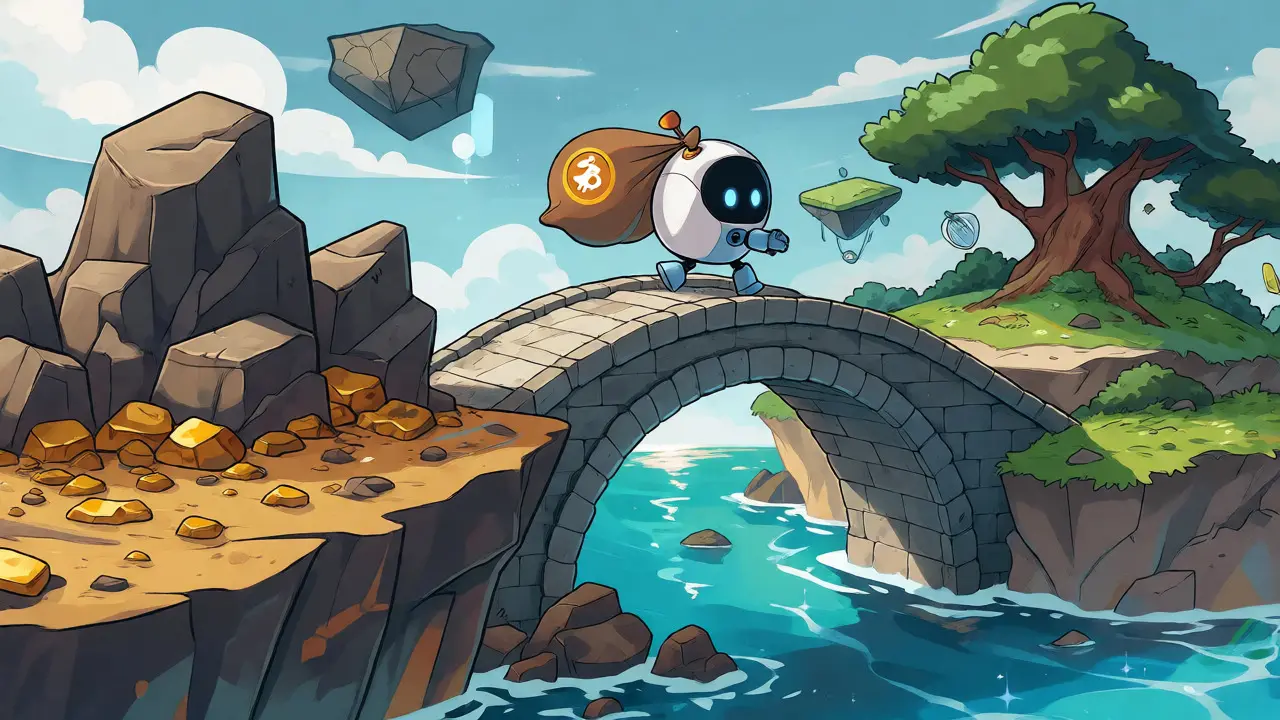
At its heart, Sovryn is a decentralized margin trading and lending protocol. Unlike Binance or Coinbase, where you deposit money into their account, Sovryn operates as a set of smart contracts on the RSK Sidechain. This sidechain connects to the main Bitcoin network, allowing developers to write smart contracts that interact with BTC. Launched in 2021, the platform allows you to swap tokens, provide liquidity, and trade with up to 5x leverage directly from your own wallet.
The platform’s architecture relies on the SOV Token, its native governance and utility token. Interestingly, while the platform lives on the Bitcoin ecosystem, the SOV token itself is often traded on other chains, creating a cross-chain dynamic. The goal here is simple: bring the efficiency of decentralized exchanges (DEXs) to Bitcoin holders who want more than just holding their asset in cold storage.
How It Works: The RSK Connection
To use Sovryn, you don’t create an account with an email and password. Instead, you connect a compatible wallet like Nifty Wallet or Liquality. These wallets support the RSK network, which acts as the bridge between Bitcoin and smart contract functionality. When you execute a trade, the transaction happens on-chain. This means every swap, loan, or liquidation is recorded publicly on the ledger.
One critical aspect to understand is gas fees. Because Sovryn runs on RSK, you pay fees in RBTC (a wrapped version of Bitcoin). These fees fluctuate based on network congestion. During busy periods, swapping small amounts can become expensive. However, because there is no intermediary taking a cut for custody, the spread on trades can sometimes be competitive, provided liquidity is available.
| Feature | Sovryn (DeFi) | Centralized Exchange (CEX) |
|---|---|---|
| Custody of Funds | User-controlled (Non-custodial) | Exchange-controlled (Custodial) |
| KYC Verification | Not required | Mandatory for most features |
| Trading Interface | Web3 Wallet Connect | Email/Password Login |
| Leverage Options | Up to 5x (Smart Contract enforced) | Up to 100x+ (Credit model) |
| Asset Variety | Focus on BTC & RSK Tokens | Hundreds of Altcoins |
| Insurance Fund | Yes (10% of interest generated) | Varies by exchange policy |
Core Features: Trading and Lending
Sovryn isn’t just about swapping one coin for another. Its standout feature is margin trading. You can open long or short positions using your Bitcoin as collateral. If you believe BTC will rise, you can borrow stablecoins to buy more BTC. If you think it will drop, you can short it. The system uses an automated market maker (AMM) model combined with order books for better price discovery.
For lenders, Sovryn offers yield opportunities. By supplying assets to liquidity pools, you earn fees from traders. There is also a specific insurance fund mechanism. Ten percent of the interest generated from loans goes into this fund. This pot of money exists to cover losses if a borrower gets liquidated at a bad price, ensuring lenders don’t lose their principal due to undercollateralization events.
A newer addition is Sovryn Zero. Launched in mid-2022, this is a trust-minimized borrowing protocol. Unlike standard loans where you might need significant over-collateralization, Zero aims for efficiency. Early data suggests consistent growth in this sector, though access has historically been invite-only or limited, making it harder for new users to jump in immediately.
Security and Risks: What Could Go Wrong?
Security is a double-edged sword in DeFi. On one hand, Sovryn doesn’t hold your money, so a hack of their database won’t drain your wallet. On the other hand, smart contract vulnerabilities are real risks. Sovryn undergoes regular audits by multiple firms and maintains a bug bounty program, which is a good sign. However, "audited" does not mean "risk-free." Bugs happen, and in crypto, code is law.
Another risk factor is regulatory uncertainty. As of late 2025, Sovryn does not appear to be regulated by major government authorities. For some users, this freedom is a feature. For others, especially those in strict jurisdictions, it poses compliance questions. If regulators crack down on unregistered DeFi protocols, users might face friction when trying to off-ramp back to fiat currency.
Price volatility of the SOV token also matters. With a market cap hovering around $1.8 million and a circulating supply of roughly 18 million tokens, it is a micro-cap asset. Predictions vary wildly-some analysts see modest gains, while others predict stagnation. Don’t invest in SOV expecting it to act like Bitcoin; it behaves more like a high-risk venture capital bet on the success of the platform itself.

User Experience and Community Feedback
Let’s be honest: Sovryn is not beginner-friendly. User reviews frequently mention a steep learning curve. Connecting a wallet, bridging assets from Bitcoin to RSK, and understanding gas fees takes patience. Traffic data shows a bounce rate of 50%, meaning half the people who visit leave quickly, likely overwhelmed by the interface or confused by the setup process.
However, those who stick around tend to appreciate the transparency. Reddit discussions highlight that power users love the lack of KYC and the ability to automate limit orders. Support channels are community-driven, primarily through Telegram and GitHub. There is no 24/7 customer service hotline. If you get stuck, you’re reading documentation or asking the community. For tech-savvy crypto enthusiasts, this is acceptable. For casual investors, it can be frustrating.
Who Should Use Sovryn?
You should consider Sovryn if you already hold Bitcoin and want to put it to work without trusting a third party. It is ideal for privacy advocates who refuse to share passport copies with exchanges. It also suits traders who want to experiment with leverage on a platform that settles directly on the Bitcoin layer.
Conversely, skip Sovryn if you are looking for hundreds of altcoin pairs, low-latency execution for day trading, or a simple mobile app experience. If you need to withdraw cash to your bank account instantly, Sovryn adds extra steps (bridging back to mainnet or using other exchanges) that might annoy you.
Frequently Asked Questions
Is Sovryn safe to use?
Sovryn employs rigorous security measures, including multiple independent audits and a bug bounty program. Since it is non-custodial, the platform cannot freeze your funds or lose them in a central exchange hack. However, as with any DeFi protocol, smart contract risks exist, so users should only invest what they can afford to lose.
Do I need to complete KYC verification on Sovryn?
No, Sovryn does not require Know Your Customer (KYC) verification. You can trade, lend, and borrow anonymously using just your cryptocurrency wallet. This makes it attractive for users prioritizing privacy, but it also means there is no traditional customer support identity recovery if you lose your keys.
What are the fees associated with using Sovryn?
Users pay trading fees determined by the AMM model and network gas fees on the RSK sidechain. Gas fees are paid in RBTC and fluctuate based on network congestion. Additionally, borrowers pay interest rates that vary dynamically based on supply and demand within the lending pools.
Can I trade any cryptocurrency on Sovryn?
Sovryn primarily supports Bitcoin (BTC), Stablecoins (like USDT, USDC), and tokens native to the RSK ecosystem. It does not offer the vast array of altcoins found on centralized exchanges or Ethereum-based DEXs. Its focus is strictly on Bitcoin-native financial instruments.
How do I start using Sovryn?
To start, download an RSK-compatible wallet such as Nifty Wallet or Liquality. Bridge some Bitcoin to the RSK network to obtain RBTC for gas fees. Then, connect your wallet to the live.sovryn.app website to begin swapping, providing liquidity, or opening margin positions.
Newman Thurairatnam
septembre 14, 2026 AT 01:22Chers lecteurs, il est impératif de considérer que la décentralisation n'est pas une fin en soi mais un moyen de se prémunir contre l'incompétence des intermédiaires traditionnels. Sovryn, bien que techniquement complexe, offre cette liberté fondamentale qui nous a été volée par les banques centrales. :)
Joachim Veulemans
septembre 14, 2026 AT 09:01Le point sur la courbe d'apprentissage est juste.
Pour ceux qui débutent, ne vous laissez pas intimider par le bridging RSK. C'est juste un peu de patience au départ.
Yvette Cañeso
septembre 16, 2026 AT 08:21encore un article qui vante les mérites d'une plateforme obscure sans parler du vrai problème la liquidité ridicule comparé à eth ou btc pur c'est pathétique
Audrey Gayle
septembre 16, 2026 AT 15:47Salut ! Petite précision technique pour éviter les erreurs de débutants : quand on parle de "gas fees" sur Sovryn, on paie en RBTC (Rootstock Bitcoin). Ce n'est pas du BTC natif donc attention aux conversions si tu viens directement du réseau principal Bitcoin. Le bridge Liquality est plutôt stable mais vérifie toujours les frais actuels avant de bouger des gros montants.
Laurence Defabri
septembre 17, 2026 AT 04:23C'est super intéressant de voir qu'on peut vraiment garder ses clés privées tout en faisant du trading avec effet de levier ! J'ai hâte d'essayer pour voir si c'est aussi simple qu'ils le disent 😊
Erwan Kervella
septembre 17, 2026 AT 12:00Enfin quelqu'un qui dit la vérité !!! 🚨 Les banques sont des voleurs et Sovryn est la seule vraie alternative sérieuse maintenant !! 🔥🔥🔥 Il faut arrêter de faire confiance à ces institutions corrompues !!! 💸💸💸
Bernard Prasetiyo
septembre 19, 2026 AT 09:22La sécurité des smart contracts est une illusion. Tant que le code n'est pas immuable et audité par des entités indépendantes et non rémunérées par le projet, il y a un risque systémique. De plus, l'absence de régulation signifie que personne ne sera tenu responsable en cas de faille. C'est la loi du plus fort numérique.
Kiki Stephanie Valentine
septembre 19, 2026 AT 23:55Franchement, le taux de rebond de 50% mentionné dans l'article est révélateur. La plupart des utilisateurs lambda n'ont pas la capacité cognitive ni technique de gérer la complexité de RSK. Ils veulent de la simplicité, pas de l'idéologie crypto-libertarienne mal exécutée. C'est du niche marketing déguisé en révolution financière.
Miguel Mottard
septembre 20, 2026 AT 00:09j'avoue que le slippage m'a deja couté cher sur un swap mineur... c'est frustrant quand on voit le spread exploser parce que la pool est vide 😩 mais bon c'est le prix de la decentralisation je suppose...
Lara Beatrice
septembre 21, 2026 AT 07:41Il semble que nous soyons face à une dichotomie classique entre la pureté idéologique et l'efficacité opérationnelle. L'absence de KYC est séduisante philosophiquement, mais elle isole Sovryn de la masse critique nécessaire à une véritable adoption institutionnelle. Sans volume, la liquidité s'évapore, créant un cercle vicieux dont il est difficile de sortir.
Nicolas Lavallee
septembre 21, 2026 AT 18:55Je reste sceptique quant à la viabilité à long terme d'un protocole basé sur une sidechain peu utilisée. L'écosystème Ethereum a déjà capturé la majeure partie de la valeur DeFi. Sovryn essaie de vendre du rêve Bitcoin alors que la réalité technique impose des compromis qui rendent l'expérience utilisateur médiocre pour le commun des mortels.
regine ong
septembre 22, 2026 AT 12:54Merci pour ce partage ! 🌟 J'utilise Sovryn depuis quelques mois et je trouve que la communauté est très aidante sur Telegram. C'est vrai que c'est pas évident au début mais une fois qu'on a compris le mécanisme de bridging, ça devient fluide. N'hésitez pas à demander de l'aide, on est tous passés par là ! 😉
Philippe Dornbusch
septembre 24, 2026 AT 12:18Trop compliqué pour rien. Je garde mes BTC en cold storage et je trade ailleurs. Point.
Monique Fausett
septembre 25, 2026 AT 21:18c'est clair que la friction est réelle mais hey au moins t'es ton propre banquier 👍
Mickaël Nicolaccini
septembre 27, 2026 AT 17:07je préfère rester discret et observer les volumes avant de me lancer. trop de bruit autour des projets bitcoin defi en ce moment
Stephane Zummo
septembre 29, 2026 AT 06:23Est-ce que quelqu'un a testé la fonctionnalité Sovryn Zero récemment ? J'ai lu qu'elle était limitée mais j'aimerais savoir si l'accès s'est amélioré pour les nouveaux utilisateurs ou si c'est toujours réservé aux early adopters.
Annabelle Cruz
septembre 30, 2026 AT 12:16Nous devons absolument soutenir cette initiative qui redonne le pouvoir aux individus. La centralisation est un fléau moderne et Sovryn représente une étape cruciale vers notre autonomie financière. Continuons à promouvoir ces alternatives dignes de ce nom.
James Venturini
septembre 30, 2026 AT 19:08Allez-y foncez ! Si vous voulez comprendre comment fonctionne réellement la finance décentralisée, c'est ici qu'il faut être. Ne laissez pas la peur de la technique vous bloquer. Chaque transaction est une victoire contre le système traditionnel. Restez concentrés et disciplinés.
Jean Campoverde
octobre 1, 2026 AT 17:17La nature même de la propriété privée implique la responsabilité totale. En choisissant Sovryn, vous acceptez que la perte de vos clés soit irréversible. Il n'y a pas de service client pour récupérer votre argent. Cette solitude financière est le prix de la liberté absolue. Pensez-y avant de cliquer.
Carine Schneider
octobre 2, 2026 AT 09:07Courage à tous les nouveaux ! C'est dur au début mais ça vaut le coup 💪
Guy Siedel
octobre 3, 2026 AT 22:51Pour ceux qui hésitent, commencez petit. Quelques dollars pour tester le flux de travail. Pas besoin de mettre toute sa fortune dès le premier jour.